



Tourist attractions in Slovakia
Accommodation in Slovakia
List of tourist attractions in Slovakia

DIVÍN Castle
Divín is a ruin of a Gothic castle, the ruins of which are located in the village of Divín. The castle was built in the 13th century to protect the road to the Central Slovak mining area. In 1559, a new fort was built with modern defensive elements. However, even these measures did not prevent it from being conquered by the Turks in 1575, who occupied it until 1593. The castle became fatal for the looting actions of its owner Imrich Balassa - in 1683 it was conquered and set on fire by imperial troops. Divín Castle and Podhradie originally belonged to the Novohradská seat. The stool area...

Castle DOBRÁ NIVA
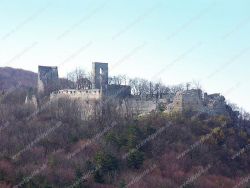
Castle of Dobra Niva or even Dobronivský Castle is a gothic castle ruins situated in the village Podzámčok. The castle was built probably after the Mongol invasion in the second half of the 13th century as a guard building at the old trade route south from Zvolen. It was the centre of Dobra Niva royal property until the 16th century. In the 15th century it belonged to the property of the queens. At the beginning of the 17th century the castle was in such bad shape that the administration of the estate moved into the new building, which was built in 1609. The castle inhabited only by garrison....
HAJNÁČKA Castle
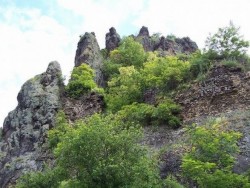
Hajnáčka Castle is a freely accessible ruin of the original Gothic castle, which was built in the 13th century. It is located on a basalt hill directly above the village Hajnáčka. The village can be found in the middle of the Cer Highlands, in the valley of the river Gortva, 12 km southeast of Fiľakovo. During the Tartar invasion (1241-1242), the former Jobagionists of Beckov Castle built a fortification on Darmskó Hill. Originally, the castle served as a refuge. Later, around the middle of the 15th century, the castle was completed. It burned down in 1703 and was not rebuilt. Remains of...

HRIČOV Castle
The ruins of the castle perk on the steep hill above Hričovské Podhradie. Originally, it was a Roman royal castle that stood at the road along the river Váh already before the Tatar invasion. It has been famous since 1265. It has been built on steep rangy rocky hill, on the left bank of the river Váh and it belongs among the oldest castles on the middle part of Váh. The castle is rather small and it is being built into the rocky uneven terrain. The first written reference about settlement on the territory of the Hričovské Podhradie dates back to the era of Matthias Corvinus. The castle...
KEŽMAROK CASTLE
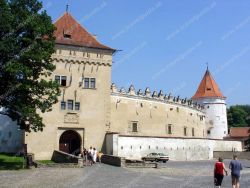
Originally Gothic castle built on the break of the 14th and 15th centuries. Tokoli family owned the castle for a long time. It burnt out in 1787. Heritage renovation for museum purposes started in the beginning of the 20th century. Today the castle is the residence of Podtatranske Museum in Kežmarok. Expositions: Kežmarok - Medieval town Kežmarok shooting club Historical weapons, guilds and crafts Union of Spiš doctors and pharmacists Development of Kežmarok in 19th and 20th centuries Historical portraits in Spiš Kežmarok...
KORLATKA CASTLE
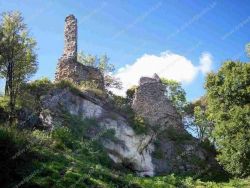
Korlátka is a ruin of a castle guarding the so-called The Czech way. The castle is located in the Little Carpathians, 455 m above sea level. m., above the village Cerová at the part of Rozbehy. It dates from the 13th century and was abandoned in the 18th century. Today, the fragments of the cylindrical tower (unique in Slovakia), the remains of the palace and walls have been preserved. The most preserved is the farm building in the forecourt. Other castle names: Korlátsky hrad, Korlátko, Korlátky, Cerovský zámok, Konrádov kameň, 1324 Korlathkeu, 1399 Korlathkw, Kunradstayn, 1443 Koratowe...
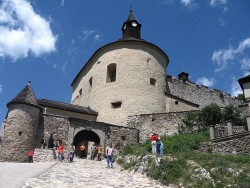
KRASNA HORKA Castle
The castle that is a national culture heritage lies 8 kilometres from Roznava, near the village Krasnohorske Podhradie. Originally Gothic castle from the 14th century towers of the high steep conic hill. It was rebuilt into a fort in Renaissance style, later on into presentable residence of nobility. Until 1812 the castle was inhabited. The last owner Dionyz Andrassy turned the place to a family museum and since 1906 it has been open to public. A part of Krasna Horka Castle is a mausoleum at eastern end of the village. There are marble sarcophagi in it. The mausoleum was built by Dionyz Andrassy...
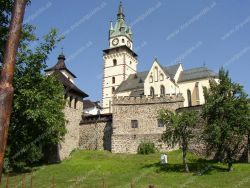
Kremnica Castle
Town castle Kremnica is the complex of buildings built and fortified in 13th - 15th century. The building of St. Katharine Church is dominant; it was built in Gothic style. In present time the castle is the residence of Coin and Medal Museum. Exposures: Baroque sculptures Kremnica bells Town defence Archaeological researches of the castle Opening hours June to September (Tuesday - Sunday) 08.30 - 12.00 13.00 - 17.30 October to May (Tuesday - Saturday) 09.00 - 12.00 13.00 - 16.30
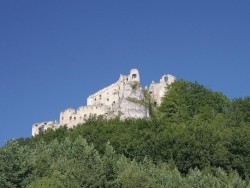
LIETAVA CASTLE
The castle was built in the second half of the 13th century, the first reference about it dates back to 1318. In the second half of the 16th century it was gained by the Thurzos and they owned it till its downfall in the years 1698-1770. Since that time, it has continuously run riot. The fortifications, the walls of the donjon, remainders of palaces for living and of the chapel have been preserved. At the beginning of the 18th century the castle burnt down, it lost its defensive function and it ran riot. At present times, ruins stand on its place, however, conclusive evidence has been preserved...
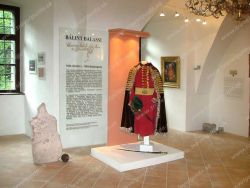
BLUE ROCK CASTLE
The Blue Rock castle was built in the 12th century by an important and weighty Ugrian family of the Balassas that lived here till the half of the 19th century. An important Renaissance poet and an anti–Turkish fighter, Bálint Balassi /1554-1594/, comes of this family. The last owner, Countess Gabriela Almássy sold the castle with manor-house and neighbouring lands to the Czecho-Slovak State in 1923. The area of the castle is created by ruins of the Gothic castle from the 12th century and of a Baroque castle from 1730 that is a seat of a museum at present. Part of the Baroque castle is...
PAJSTUN CASTLE
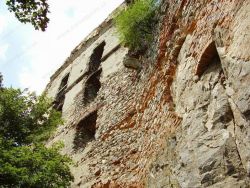
The Pajstun castle belongs in the system of border castles that took over, since the 13th century, the function of protection of the north-western borders of the Ugrian state in the Small Carpathians. The beginnings of the royal castle date back to the second half of the 13th century. It has been documented since 1273. The oldest owners used to have a shared lordship with Stupava where they returned in a later stage. Since the 14th century it belonged to counts from Svätý Jur and Pezinok continuously, up to the year 1526 when the family died out and the property got into the ownership of the...
ŠOMOŠKA CASTLE
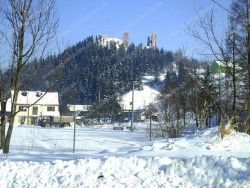
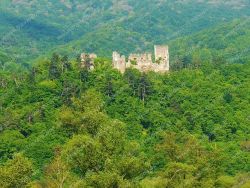
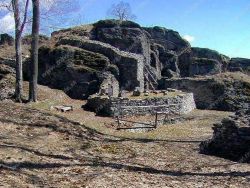
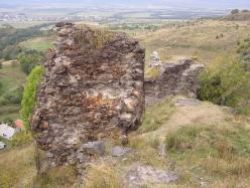
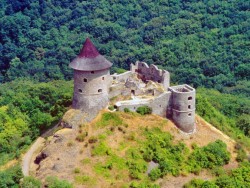
Šomoška Castle built of unconventional hexagonal basalt columns is unique among the Slovak castles. Its scenic beauty ranks it among the most beautiful castles in Slovakia. It is located on the Hungarian border above the Hungarian village Somoskő. The castle was built in the early 14th century by Kacsics Dynasty. In 1323 King Charles-Robert donated castle to Thomas Széczényi. During his era, the castle was a bustling centre of social life. The original base of the castle was a building that with a wall closed the relatively small triangular courtyard. In the 15th century, when firearms...
STREČNO Castle
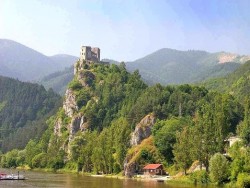
The romantic ruins of the Strečno castle dominate above the ribbon of the river Váh as the symbol of feudal powers on the middle part of the river Váh. Although being in ruins already for three centuries, its preserved architecture is proof of development of mediaeval fortress from the period of Gothic until the period of Baroque. Although the history of the castle began only in the middle of the 14th century, the first inhabitants came here far earlier – the archaeological findings proved the settlement of the castle hill already in the earlier Bronze Age. The explicit written proof about...
TEMATÍN CASTLE
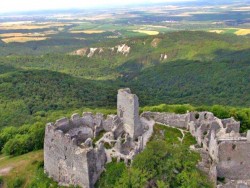
Tematín Castle is a castle ruin in western Slovakia. The castle was originally built in the second half of the 13th century. It was fundamentally reconstructed by the Thurzo family, owners of the castle from 1524. The last owner was Miklós Bercsényi, general of the anti-Habsburg insurrection army. The castle was turned into ruins after it was sieged in 1710 as a part of the suppression of the anti-Habsburg uprising.
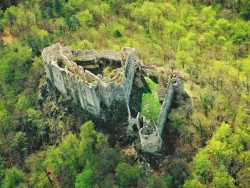
Uhrovec Castle
Uhrovec Castle ruins, towering at a height of 590 metres above sea level, on the side ridge of Nitricka Hills, located near the village Uhrovské Podhradie. The castle probably dates from the 13th century. It can be assumed that Matus Cak was involved in the construction development of the castle. In 1389 Emperor Sigismund donated the castle and vast possessions to Ctibor from Ctiborice, the richest tycoon of Western Slovakia, which extended the castle. In the 15th and 16th centuries the proprietary disputes were led and the castle frequently changed owners until it was gained by noble family...
Our tips
64.50 €
32.50 €
28.50 €


HEPEX Slovakia s.r.o.
All rights reserved.
Webdesign Pixa.sk
Change cookie settings