



National cultural monuments in Slovakia
Accommodation in Slovakia
List of tourist attractions in Slovakia
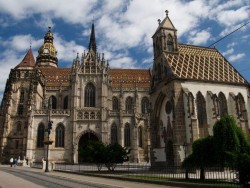
St. Elisabeth Cathedral
The St. Elisabeth Cathedral is a Gothic cathedral in Košice. It is Slovakia's biggest church. The record on the existence of Košice dating from 1230 in connected with that on the existence of the rectory church. In the process of the settlement's transformation from a rural community into a town, all its periods of success and failures had been reflected on St. Elizabeth's Cathedral. According to historic data the present-day cathedral was built on the site of an edifice of older date which was consecrated to St. Elisabeth as well. It was referred to in the document of Pope Martin...

St. Martin's Cathedral in Bratislava
The St. Martin's Cathedral (Slovak: Katedrála svätého Martina) is a cathedral in Slovakia's capital, Bratislava. It is situated at the western border of the historical city center below Bratislava Castle. It is the largest and finest, as well as one of the oldest churches in Bratislava, known especially for previously being the coronation church of the Kingdom of Hungary. Currently, it is the cathedral of the Archdiocese of Bratislava. From 1995 to February 2008 it was the concathedral of the Archdiocese of Bratislava-Trnava.

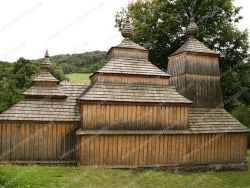
Saint Michael's Wooden Church - Príkra
The Church of St. Michael the Archangel, also called the Wooden Church or Church, is a Greek Catholic wooden church in the village of Příkra. It has been a national cultural monument since 1968. It stands on an elevated stone foundation, which balances the slope of the terrain to the west. The entrance to the vestibule is from the west side. A special element is the covering of the roof spaces between the tower and the nave and between the nave and the sanctuary. The temple was reconstructed in 1902 and in the years 1946-1947. The current appearance is the result of reconstruction work in the...
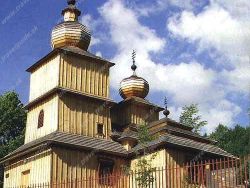
Saint Paraskieva's Wooden Church - Dobroslava
The Church of St. Paraskieva is a Greek Catholic wooden church located in the village of Dobroslava in the Svidník district in the Prešov region. The church dating from 1705 is a three-room building in the shape of a cross with a transverse nave standing on a high stone foundation. Its characteristic appearance includes three unequally high domes topped by towers with mines. The church area is surrounded by a fence. There is a cemetery inside the complex. The church was rebuilt in 1880 and finally in 1932, when two side chapels were attached to the building, which gave it its current appearance....
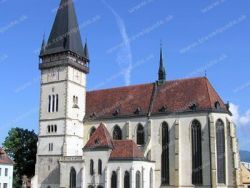
CHURCH OF ST EGIDIUS - BARDEJOV
The most important monument on the principal square in Bardejov inscribed in the UNESCO World Cultural and Natural Heritage, is the parish church of St Egidius standing in its northern part. Its construction started at the beginning of the 15th century probably at the site of the Cistercian monastery. It was conceived as a majestic Gothic basilica with three naves. The main nave and the church as a whole were finished in the years 1513-1518. The generally simple architecture of the church contains many valuable details and artistic works. In the set of 11 Late Gothic wing altars...
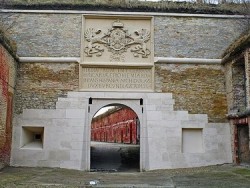
Ferdinand gate
National monument - Old Fort, which is the provisional list of World Heritage Site welcomes its guests newly renovated Ferdinandova gate. You can see there a memorial plaque on the facade with the coat of arms and the inscription Ferdinand I Roman Emperor. In 2011, the reconstruction of the entire entrance to the Old Fort was completed. The construction of the fortress was ordered in 1541 by the Roman-German Emperor Ferdinand I of Habsburg, therefore the gate was named after him. It was the first bastion fortress built outside Italy. Construction began in 1546 and finished it in 1557. The fortress...
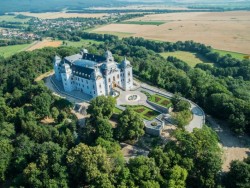
HALIČ CASTLE
The HALIČ CASTLE dating from 1612 is the dominant feature of the village of Halič. It is situated on a lonely wooded hill. The view of the chateau is cut out of a fairy tale and the view from the windows of the chateau is magnificent. You can see 15 surrounding villages and, with good visibility, also some peaks of the High Tatras. The castle forest park has an area of 13 hectares with an artificial lake. The beginnings of Halič Castle date back to the 12th century - it is stated that there was a ground fortress. The Halič castle estate belonged to the Tomajov family, then the Lossonczy...

HAVRÁNOK
Havránok is an important archaeological site in northern Slovakia. It is located on a hill above the Liptovská Mara water reservoir around 2 km from the village of Bobrovník, about halfway between Ružomberok and Liptovský Mikuláš in the Liptov region. The archaeologists unearthed a prehistoric Celtic hill fort and a medieval wooden castle in the 1960s, during the construction of the Liptovská Mara dam. Both objects have been partially reconstructed. During the Iron Age and the Roman Era, the shrine of Havránok was an important religious center of the Celts living in Slovakia.

BECKOV CASTLE
The Beckov castle was built in the 12th century as a part of border fortification of Hungarian Empire. The castle flourished in the 14 - 15th century, later became shabby. The historical and archaeological research was carried out in the 70s of the 20th century. After the reconstruction in 1996 the ruins of the castle were strengthened and open for the public. Open: May-October, Tuesday-Sunday, 9 a.m. - 6 p.m.
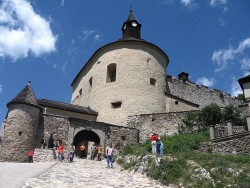
KRASNA HORKA Castle
The castle that is a national culture heritage lies 8 kilometres from Roznava, near the village Krasnohorske Podhradie. Originally Gothic castle from the 14th century towers of the high steep conic hill. It was rebuilt into a fort in Renaissance style, later on into presentable residence of nobility. Until 1812 the castle was inhabited. The last owner Dionyz Andrassy turned the place to a family museum and since 1906 it has been open to public. A part of Krasna Horka Castle is a mausoleum at eastern end of the village. There are marble sarcophagi in it. The mausoleum was built by Dionyz Andrassy...
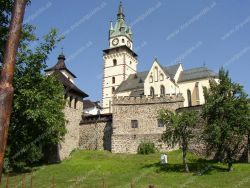
Kremnica Castle
Town castle Kremnica is the complex of buildings built and fortified in 13th - 15th century. The building of St. Katharine Church is dominant; it was built in Gothic style. In present time the castle is the residence of Coin and Medal Museum. Exposures: Baroque sculptures Kremnica bells Town defence Archaeological researches of the castle Opening hours June to September (Tuesday - Sunday) 08.30 - 12.00 13.00 - 17.30 October to May (Tuesday - Saturday) 09.00 - 12.00 13.00 - 16.30
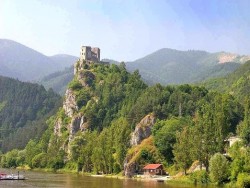
STREČNO Castle
The romantic ruins of the Strečno castle dominate above the ribbon of the river Váh as the symbol of feudal powers on the middle part of the river Váh. Although being in ruins already for three centuries, its preserved architecture is proof of development of mediaeval fortress from the period of Gothic until the period of Baroque. Although the history of the castle began only in the middle of the 14th century, the first inhabitants came here far earlier – the archaeological findings proved the settlement of the castle hill already in the earlier Bronze Age. The explicit written proof about...
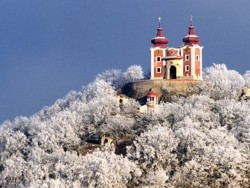
Calvary of Banská Štiavnica
Calvaries were built throughout Europe in the Middle Ages to commemorate the sufferings of Jesus. The Calvary in Banská Štiavnica was built by the Jesuits on the eastern side of the town, on the slope of Scharfenberg – Calvary Hill, facing the town. It consists of three churches and many small chapels. The upper church was called the German church, the middle one the Hungarian, and the lower one the Slovak, as masses during pilgrimages were celebrated in these languages. The Calvary of Banská Štiavnica is renowned not only for its picturesque location but also because, instead of the...
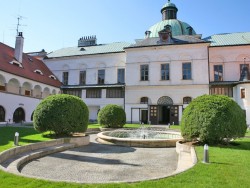
Topoľčianky Manor House and Castle
The village of Topoľčianky, which is located north of the western Slovak town of Zlaté Moravce at the foothill of the Tribeč Mountains, boasts an extensive English garden, which features a picturesque Classicist-style manor house that forms the southern wing of an old castle. The area originally featured a Gothic-style water castle and later a Renaissance fortress. At the outset of the 19th century, the then owner of the castle Count Ján Keglevich pulled down the southern Renaissance tract of the castle built and replaced it with a Classicist one, which is considered one of the purest and...

BUDMERICE Mansion
The Budmerice manor house is located in the Trnava Uplands near the edge of the Little Carpathians, in a park in front of the village of Budmerice, which in the past was a serf village of Červený Kameň Castle. It is 10 km from Modra and 15 km from Trnava. The manor is surrounded by an English park. It was built in 1889 in the pseudo-Gothic style by the Pálffy family as a hunting lodge. The Renaissance castles on the Loire were probably the inspiration for the construction. The architecture of the manor is a set of elements of several historical periods. The main façade with a receding risalit...
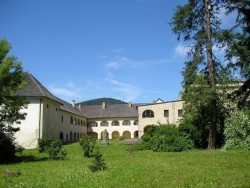
SVÄTÝ ANTON (SAINT ANTHONY) CASTLE
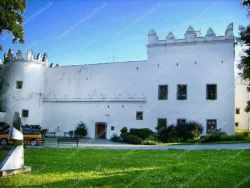
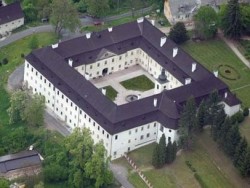
The Saint Anthony castle is also called Antol castle; it is a castle that is situated under the forest in the village of Svätý Anton (Saint Anthony) nearby Banská Štiavnica. It is a rather well preserved late Baroque-Classicistic castle with a large park. Since 1985, it has been evidenced as national cultural memory and it is made accessible also to the public. The late Baroque castle was built in 1744-1750 on the place of an older castle from the 15th century. The castle is precious due to its interior decoration. The last occupant was the Bulgarian tsar Ferdinand Couburg. The castle...
Oščadnica Manor
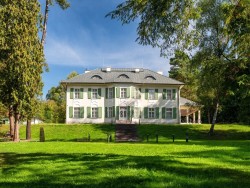
The mansion in Oščadnica was built in the years 1910 - 1913 by the Prussian Junker Count Ballestrem. At that time, the mansion served as a hunting lodge, and the count established a forest park with an area of over 3 hectares. The manor building is two-track and two-story, symmetrical to the central axis, oriented longitudinally in the east-west direction. Over time, the manor house changed owners and other buildings were gradually added to it. In 1976, the mansion became the property of the Kysucka Gallery in Čadec and is currently the seat of the Kysucka Gallery in Oščadnica. The premises...
Our tips
44.50 €
69.50 €
70.00 €


HEPEX Slovakia s.r.o.
All rights reserved.
Webdesign Pixa.sk
Change cookie settings