



Nitra, technical monuments
Accommodation Nitra
List of tourist attractions Nitra

Diocesan Museum of the Nitra Bishopric
Located in the heart of the ancient Nitra Diocese, the Diocesan Museum is one of the oldest church museums in Slovakia, founded as early as 1883. It presents a rich collection of sacred art, historical liturgical objects, rare manuscripts, and documents connected to the history of Christianity in Slovakia. The unique exhibition showcases more than a thousand years of spiritual heritage of Nitra, highlighting its role as a center of Christian faith and education. A visit to the museum offers an extraordinary journey into the past, where history, art, and faith intertwine.
Find Technical monuments in the surrounding area of Nitra:

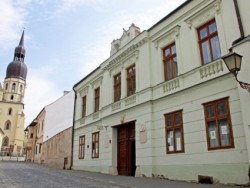
House of Music of Mikuláš Schneider-Trnavský
The House of Music of Mikuláš Schneider-Trnavský is a unique cultural venue that connects history with music. Visitors can explore the life and work of the famous Slovak composer and conductor, best known for his iconic song How Beautiful You Are. The permanent exhibition showcases his creations alongside displays dedicated to the art of music. The atmosphere is enriched by concerts, lectures, and cultural events, making the House of Music a lively meeting place for music lovers. Located in the...
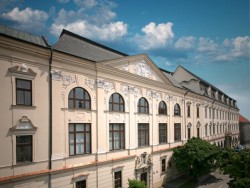


Historická budova Teologickej a Filozofickej fakulty Trnavskej Univerzity

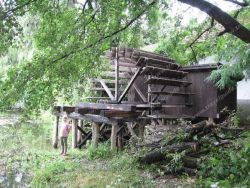
Watermill DUNAJSKÝ KLÁTOV
The water mill in Dunajská Klátov - it is the only cultural and technical monument in the Dunajská Streda district - is the last example of water mills that worked on Žitný ostrov. This mill has several specific properties. The first is that it is not located directly on the flow of the Little Danube, but on its arm - Klátovsky. Unlike the others, only the wheel and the drive part are located in a wooden outbuilding, the mill itself is brick. The mill was built in 1920 by Ján Csefalvay and...
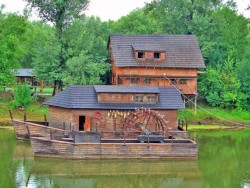
WATERMILL KOLÁROVO
Natural camp has already been predestined for its location for the most various activities. It is situated in the closeness of the town Kolárovo /ap. 500 meters ../ on the east border of „Rie island„. Natural camp lies on the foreland, which borders are formed by Small Danube and Váh from one side and by dried arm of Small Danube from other side. Since a half of the 15 th century belongs to the unthinkable part of the territory a Castle of peace its rummage /ground wall/ has been well...
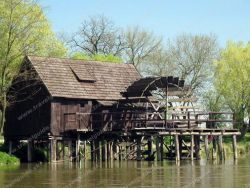
WATERMILL JELKA
The water mill in Jelka is located in a beautiful corner on the bank of the Little Danube. The restored mill, which originally belonged to Jozef Németh, is currently open to the public. A remarkable technical monument in southwestern Slovakia is accessible by a dirt road (1 km) from the road from the village towards Dunajská Streda. The oldest proof of the mill comes from 1894. The mill originally consisted of two ships built in the middle, connected by a massive mill wheel. The dominant part of...
Our tips
42.50 €

69.50 €
80.00 €


HEPEX Slovakia s.r.o.
All rights reserved.
Webdesign Pixa.sk
Change cookie settings