



Nitra - tourist attractions
Accommodation Nitra
List of tourist attractions Nitra
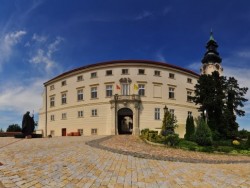
Bishop’s Palace
The Bishop’s Palace, a dominant landmark of Nitra’s Upper Town, is the historic residence of the bishops of Nitra, with origins dating back to the Middle Ages. Its current Baroque-Classical appearance was shaped during renovations in the 18th and 19th centuries. Located right next to St. Emmeram’s Cathedral, the palace forms an impressive complex within the Nitra Castle area. It still serves as the residence of the bishop of Nitra and ranks among the city’s most important religious and cultural monuments.

Diocesan Museum of the Nitra Bishopric
Located in the heart of the ancient Nitra Diocese, the Diocesan Museum is one of the oldest church museums in Slovakia, founded as early as 1883. It presents a rich collection of sacred art, historical liturgical objects, rare manuscripts, and documents connected to the history of Christianity in Slovakia. The unique exhibition showcases more than a thousand years of spiritual heritage of Nitra, highlighting its role as a center of Christian faith and education. A visit to the museum offers an extraordinary journey into the past, where history, art, and faith intertwine.

Andrej Bagar Theatre
Andrej Bagar Theatre in Nitra has been operating since 1949; it is named since 1979 according to Andrej Bagar. Since 1992 it plays in one of the largest and most modern theatre buildings in Slovakia. The first Nitra's theatre was built in 1883 with a capacity of 360 seats. The building stood on the area of the current theatre of it served to the public until its destruction by air bomb in World War II. For theatrical purposes adapted area served since December 1949 - a full 43 years. At present, Old Theatre acts in this building acts. In 1979, the Nitra Regional Theatre was named after Andrej...

Františkánsky kláštor a farský chrám sv. Petra a sv. Pavla
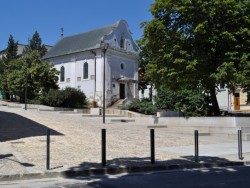
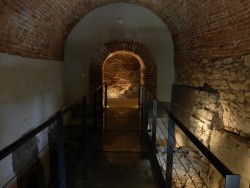

Kláštorný komplex piaristov - Kostol sv. Ladislava
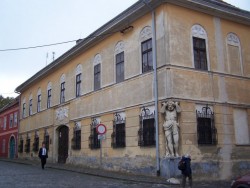

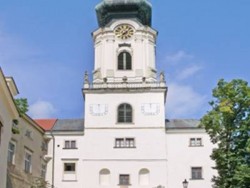
Kostol sv. Emeráma
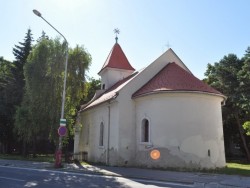
St. Emmeram's Cathedral bears Romanesque style. It has a horseshoe-shaped Romanian apse, separated from the square nave by a triumphal arch. The original building was damaged and later shortened in 1328 as space was needed to build the support columns of the Upper Church. After the construction of the Gothic church, part of the church was used as an archive. After a fire raging in the church in 1465, the Romanesque part of the castle church was erected and then covered with a rib vault. The current reconstruction of the current church interior took place in 1930-31. Of great value is the...
Kostol sv. Štefana Kráľa
The Romanesque church from the 10th century has undergone many changes over the centuries. In the 12th century, the horseshoe-shaped sanctuary was followed by a semicircle, and then the choir was built. The church dates from the 13th to the 14th century. century, it was expanded with a Gothic-style sacristy. The Turkish attacks caused serious damage to the condition of the building, its interior was completely looted, only its bell remained. No. 18 At the beginning of the 19th century, Bishop László Mattyasovszky rebuilt it in the Baroque style. The interior and furnishings of the church are...

Summer swimming pool Sihot in Nitra
The summer swimming pool is located in Nitra below the Nitra Castle, in the middle of the Sihota City Park. The swimming pool area is open to visitors from June to September, depending on the weather. There are 6 swimming pools at the swimming pool, including a swimming pool, children’s pool and a leisure pool. The dominant feature of the swimming pool is a water slide with a length of 83 meters. In the complex you will also find a children's playground as well as a sports complex where you can play beach volleyball, tennis or football. Refreshments are also available here.

Observatory Nitra
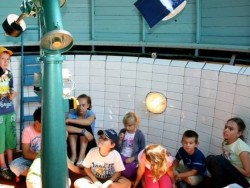
The Nitra observatory is part of the Regional Awareness Center in Nitra, located in the Chrenová housing estate. It offers astro-lectures, clubs, competitions, creative astro-workshops and other educational and popularizing events for the public. The main attraction is the commented evening and night observations of the starry sky. They are held in the dome of the observatory several times a month. In the morning hours, the observatory also offers excursions for organized groups from schools and kindergartens connected with the observation of the Sun and a lecture adapted to the age of the visitors....

Our tips
42.50 €

69.50 €
70.00 €


HEPEX Slovakia s.r.o.
All rights reserved.
Webdesign Pixa.sk
Change cookie settings