



Liptov, open air museums and folk architecture
Accommodation Liptov
List of tourist attractions Liptov

Liptov Village Museum
Museum of Liptov Village in Pribylina, the youngest museum in Slovakia was opened in 1991. The open-air museum differs from other museums in Slovakia by the fact that in addition to objects of wooden folk architecture, there are built homes of higher social classes of the this region in the past. The settlement structure is similar to larger Liptov municipalities with town privileges and prerogatives. In the middle of the village there is a large open space called rínok where residents gathered and where the markets and fairs were held. The open-air museum features Gothic-Renaissance mansion...

HAVRÁNOK
Havránok is an important archaeological site in northern Slovakia. It is located on a hill above the Liptovská Mara water reservoir around 2 km from the village of Bobrovník, about halfway between Ružomberok and Liptovský Mikuláš in the Liptov region. The archaeologists unearthed a prehistoric Celtic hill fort and a medieval wooden castle in the 1960s, during the construction of the Liptovská Mara dam. Both objects have been partially reconstructed. During the Iron Age and the Roman Era, the shrine of Havránok was an important religious center of the Celts living in Slovakia.
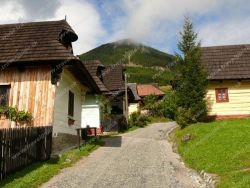
VLKOLÍNEC
Preserved site of folk architecture Vlkolinec is a part of Ruzomberok town and is located at the foot of Velka Fatra. Vlkolinec represents a type of medieval village site of wooden architecture in montane and submontane area. There is an undisturbed built-up area of cottages and chalets in landscape area made by narrow stripes of fields and pastures protected by Sidorov massif from the North. The first written notes of the village come back to 1376 when it arose as a village of woodcutters and coalmen. At the end of the 18th century the village had 41 houses and 280 inhabitants; the number of...
Our tips
44.50 €
32.50 €
80.00 €


HEPEX Slovakia s.r.o.
All rights reserved.
Webdesign Pixa.sk
Change cookie settings