



UNESCO sights in Slovakia
Accommodation in Slovakia
List of tourist attractions in Slovakia
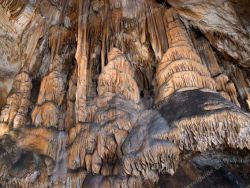
JASOVSKÁ CAVE
Jasovská Cave is located in the Medzev Upland in the western part of the Košice Basin. The cave became the first show cave in Slovakia in 1846, however the upper parts had been known as early as the 13th century and the inscription from 1452, which records the victory of Ján Jiskra’s from Brandýs military force, represents the oldest written mention in Slovak caves. It is located on the most eastern projection of the Slovak Karst, in the Medzev Upland close to the eastern edge of the Jasovská Plateau, on the western side of the Jasov village. The lower entrance to cave is on the right...

Spis Castle
Massive ruins of Spis Castle are lying on the travertine hill of 634 metres above Spis settlement around the castle. The ruins are the largest in Slovakia as well as in Central Europe. Although the first historical notes about the castle come back to the year 1120, archaeological evidence proves a settlement on the castle hill already in the 4th century BC. It was a district centre castle in the 12th century. In the first half of the 13th century there were protective stone forts around the castle acropolis. The fortification saved the castle against Tartars attacks in 1241. In that time Romanesque...
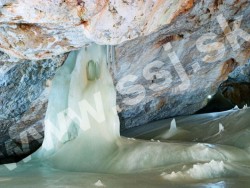
Dobšinská Ice Cave
The Dobšinská Ice Cave is situated in the Spiš-Gemer karst, in the national nature reserve Stratená, and by the character of glaciation belongs among the most important caves in the world. Ice fill occurs here in various forms and ice thickness reaches in some places 26 meters. The cave is located on the south-western edge of the Slovak Paradise National Park in the Spiš-Gemer karst. Cave entrance is on the northern slope of the Duča Hill at elevation of 969 m, 130 m above the bottom of the Hnilec Valley. You can get to cave from the Dobšinská ľadová jaskyňa settlement in the Slovak...
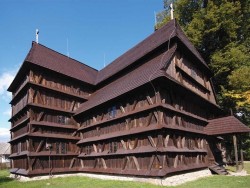
Wooden sacral architecture in the Carpathian Arc
Wooden sacral architecture in the Carpathian arc(North-Eastern Slovakia, as a joint entry of Slovakia, Poland, Ukraine and Hungary), unique churches from the 16th to 20th centuries.
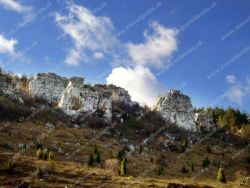
Dreveník – Travertine Hill near Spiš Castle
Dreveník is the largest travertine hill in Slovakia, located close to Spiš Castle. This natural monument is famous for its unique geological formations as well as its rare flora and fauna. Limestone structures created impressive cliffs, caves, and rock walls, making the area popular for hiking and climbing. Besides its natural beauty, Dreveník also has historical significance – traces of prehistoric settlement and valuable archaeological finds have been discovered here. From its plateau, visitors can enjoy breathtaking views of Spiš Castle and the surrounding hills.
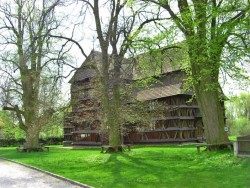
Wooden evangelical articular church in Hronsek
5 evangelical articular churches have been preserved in Slovakia. One of these five churches is the wooden evangelical articular church in Hronsek. It is one of the unique wooden churches, which are an important part of the cultural heritage. They are built exclusively of wood without the use of a single nail and are characterized by a unique originality, as is the wooden church in the village of Hronsek, which was built in 1726 on the basis of the Sopron Assembly from 1681. It is the only one of its kind in Horehronie. Its capacity is 1100 seats. The church has 30 windows in the shape of a...
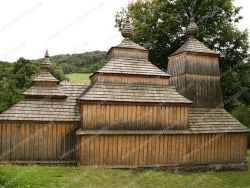
Saint Michael's Wooden Church - Príkra
The Church of St. Michael the Archangel, also called the Wooden Church or Church, is a Greek Catholic wooden church in the village of Příkra. It has been a national cultural monument since 1968. It stands on an elevated stone foundation, which balances the slope of the terrain to the west. The entrance to the vestibule is from the west side. A special element is the covering of the roof spaces between the tower and the nave and between the nave and the sanctuary. The temple was reconstructed in 1902 and in the years 1946-1947. The current appearance is the result of reconstruction work in the...
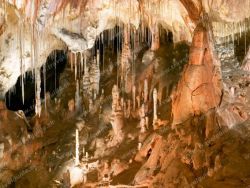
Gombasecká cave
It is located between Rožňava and Plešivec in the Slovak Karst National Park and Biospheric Reserve. Dominant elements in the Gombasecká Cave are thin and hollow straw stalactites reaching the maximum length of about 3m and in some places they are so dense that they remind a stone rain. It is situated on the western foothill of the Silická Plateau in the Slovak Karst National Park. Cave entrance is located 11 m above the Black Resurgence at elevation of 250 m above the sea. The cave is located 10 km southerly from Rožňava, on the left hand side of the Slaná River canyon, between Rožňava...
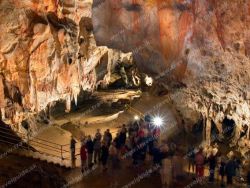
DOMICA CAVE
Close to the state boundary with Hungary there is the Domica Cave, forming a single genetic unit with the Hungarian Baradla Cave. Except for the typical flowstone shields, drums and rimstone lakes, the visitors admire underground boat ride on the Styx River. Located on the south-western edge of the Silická Plateau in the Slovak Karst National Park, 10 km to the south-east from Plešivec (village between Rožňava and Tornaľa), close to the state border with Hungary. Cave entrance is on the southern foothill of Domica Hill at elevation of 339 m. The short tour is 780 m long, the long tour (without...
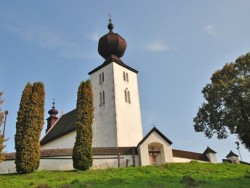
Žehra Church
The Church of the Holy Spirit dating from the second half of the 13th century is located in the village of Žehra in the district of Spišská Nová Ves. It is one of the typical buildings of the transitional, late Romanesque period. The rarest monuments in the church are wall paintings, forming a complete iconographic cycle. They cover the entire presbytery, the Triumphal Arch and the entire northern wall. St. For his historical and artistic contribution, the Spirit was included in the list of national cultural monuments in 1985. Its contribution to the world cultural history was confirmed by...
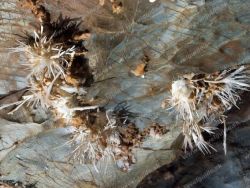
Ochtinska Aragonite Cave
Ochtinská Aragonite Cave is a specific phenomenon also from the world caves perspective, which attracts every visitor by its variability, wealth and beauty of aragonite fill. It is located on the northern slope of the Hrádok Hill in the Slovak Ore Mountains on the road between Štítnik and Jelšava, 26 km from Rožňava. It is the only one of its kind in Europe and stands out by aragonite fills of various forms. It is located in the Ochtiná cryptokarst on the north-western slope of the Hrádok Hill in the Revúcka Highland between Jelšava and Štítnik. Entrance adit leads to the cave at...

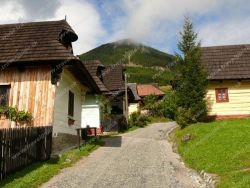
VLKOLÍNEC
Preserved site of folk architecture Vlkolinec is a part of Ruzomberok town and is located at the foot of Velka Fatra. Vlkolinec represents a type of medieval village site of wooden architecture in montane and submontane area. There is an undisturbed built-up area of cottages and chalets in landscape area made by narrow stripes of fields and pastures protected by Sidorov massif from the North. The first written notes of the village come back to 1376 when it arose as a village of woodcutters and coalmen. At the end of the 18th century the village had 41 houses and 280 inhabitants; the number of...
Our tips
44.50 €
32.50 €
30.90 €


HEPEX Slovakia s.r.o.
All rights reserved.
Webdesign Pixa.sk
Change cookie settings