



Banská Štiavnica, technical monuments
Accommodation Banská Štiavnica
List of tourist attractions Banská Štiavnica
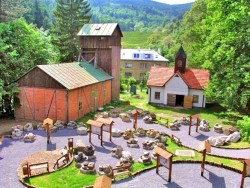
Open-air Mining Museum
Mining Museum is located west of the town of Banská Štiavnica, about 1 km in the direction of Levice. It is situated in a picturesque valley below the former mining lake Klinger on the outskirts of the town. As the oldest and most comprehensive thematic exhibition of mining in Slovakia shows the development of ore mining in Central Europe from Middle Ages to the late 20th century. The most precious exhibit in underground exposure is Gápel on horse power (engine from the mine elevator), which is the only preserved machine of that type in Slovakia. With its significance, the Kachelman water-bar...

Belházy House
Belházy House – an elegant Renaissance-Baroque gem on the corner of Andrej Sládkovič Street. Originally built in 1616 by Sigmund Eggenstein and later rebuilt by Mayor Ján Belházy, the house fascinated with its oriel window, loggia, and Baroque arcade corridor attached to the original structure. In the 18th and 19th centuries, it served as the heart of mining education – housing the department of chemistry and physics of the Mining Academy, including laboratories that influenced methods of teaching chemistry at universities worldwide. Today, it ranks among the most beautiful and significant...


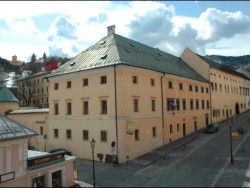

Klopačka
The Klopačka in Banská Štiavnica is a distinctive two- to four-storey tower-like building in Renaissance-Baroque style, built in 1681. Despite its simplicity, it belongs among the most remarkable mining monuments in Slovakia. At the top of the tower, there was a device – a wooden board used for knocking to summon miners to work. The knocking signaled shifts underground, festivities, or fires, and became an acoustic symbol of miners’ life. In the 18th and 19th centuries, the ground floor served as a prison for convicted miners and also housed the Brotherhood Treasury – a charitable...

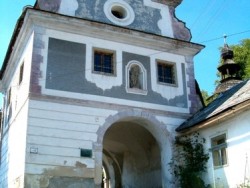


Berggericht
The Berggericht, originally the Mining Court, is a baroquized building constructed in the 15th century. From the last third of the 17th century, it was owned by the well-known Baron Gottfried János Hellenbach, one of the richest magnates in Upper Hungary. He owned mines, breweries, and numerous estates and was a supporter of Francis II Rákóczi. Between 1792 and 1854, the Mining Court – the highest authority in mining administration – was seated here. From 1854 to 1859, it served as the headquarters of the Mining Captaincy. Between 1860 and 1900, it temporarily housed the third department...

Our tips
42.50 €

69.50 €
30.90 €


HEPEX Slovakia s.r.o.
All rights reserved.
Webdesign Pixa.sk
Change cookie settings